
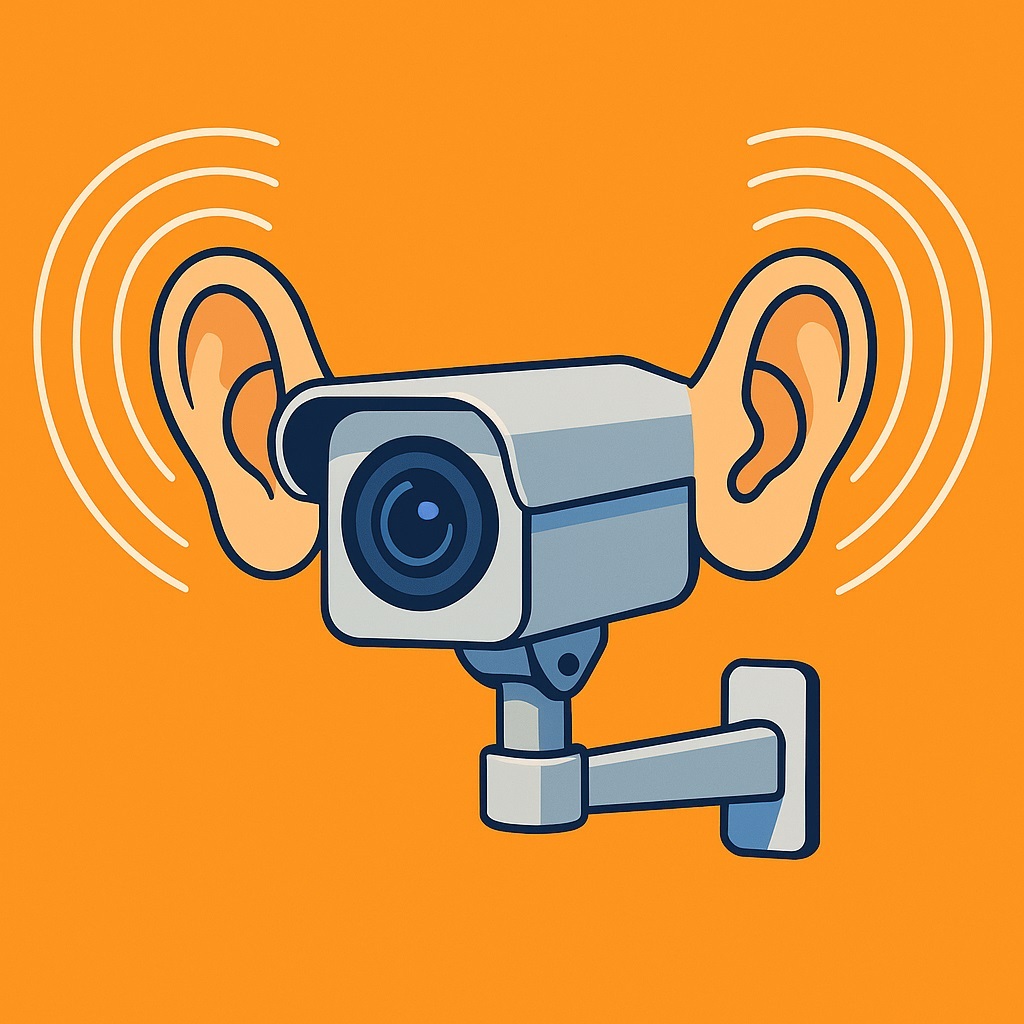
Say “video surveillance,” and most people think about image quality: crisp 4K resolution, wide viewing angles, low-light mode, fancy IR LEDs, maybe even some AI face recognition magic. But there’s a blind spot in this picture — or rather a deaf one.
Sound is the forgotten half of surveillance. A camera without a microphone is like a witness who saw everything but can’t testify. And even when audio is recorded, it’s often so bad that it’s practically useless — tinny, distorted, full of static.
The uncomfortable truth is that designing a good audio pipeline in surveillance systems is much harder than it looks. And yet, when done right, sound can completely change how we investigate incidents, resolve disputes, and even predict risks.
Why Most Surveillance Audio Sucks
If you’ve ever played back audio from a budget IP camera, you know the pain: instead of speech, you get a wall of hiss, hum, and random pops. It’s less evidence, more sonic torture.
The biggest culprit? Neglect. Integrators and DIYers just stick with the built-in microphone because it’s “there.” But built-ins are built for cost, not quality: tiny capsules, cheap membranes, poor shielding.
Then there’s compression. Many systems still default to G.711 or G.729 — codecs designed for 1990s VoIP. They strangle the frequency range, leaving you with that “talking through a tin can” sound. Good luck trying to catch the nuance of a whispered threat with that.
And finally, placement. Slapping a mic on the ceiling or tucking it in a corner is a rookie mistake. Those spots are echo chambers, capturing HVAC hum and footstep reverb instead of voices.
The Human Ear Factor
High-quality sound isn’t just about tech — it’s about how the human brain processes it. Our auditory system is great at filtering out noise in real life, but recordings don’t give us that luxury.
That’s why pro setups now use directional mics or even microphone arrays, actively “focusing” on speech sources and suppressing background noise. Think of it as giving your cameras a set of laser-focused ears.
Sound as a Trust Signal
Here’s the twist: people trust good audio more. A surveillance clip with clear voices and natural tone feels credible. A garbled recording with dropouts? It feels shady, contested, unreliable.
In corporate security, that can decide lawsuits, insurance payouts, and reputation. If you skimp on mics and codecs, you’re skimping on legal resilience.
The Checklist for Getting Audio Right
Follow these rules and you’ll stop hating your surveillance audio:
- Kill the G.7xx codecs. They were fine for analog phones. Use AAC or Opus with at least 48 kHz sampling and 128 kbps bitrate.
- Stop putting mics on ceilings. Human voices sound natural at 1.5 meters off the floor — mount them there.
- Buy a real microphone. A $10 mic will hear everything but speech. Pro mics are worth every cent.
- Use shielded cable. Otherwise every nearby power line will turn into an impromptu noise generator.
- Power clean. Cheap adapters leak hum straight into your audio.
- Tame the room. Echoey spaces are the enemy. Rugs, panels, furniture — cheap acoustic treatment goes a long way.
When Audio Turns Into Text
This is where things get sci-fi. Modern systems like SmartVision can transcribe speech in real time, turning hours of audio into searchable text.
Imagine trying to find the moment someone said “open the safe.” You don’t scroll through hours of recordings — you just type it into search and jump straight to the clip.
This isn’t hypothetical. It’s happening now.
Under the Hood
This magic runs on neural networks trained on millions of hours of speech. Models like Whisper can separate voices from noise, handle multiple languages, and even detect accents.
Some systems go further, adding speaker diarization — labeling which person said what and when. Combined with multi-camera setups, you get a synchronized timeline of who spoke in each frame.
But Garbage In = Garbage Out
Poor audio quality kills transcription accuracy. Bad mics, low-rate codecs, or humming power supplies can tank recognition rates from 95% down to gibberish territory.
Want usable transcripts? Start with clean audio.
Real-World Stories
One retail chain upgraded its mic setup and noticed not just better investigations, but fewer thefts: when employees and customers realized “yes, we can hear you,” behavior improved overnight.
In another case, HR used speech analytics to flag toxic workplace incidents. The system detected raised voices and aggressive language before it escalated into resignations and lawsuits.
Legal Landmines
Recording audio isn’t just a technical challenge — it’s a legal one. In some regions, you’re required to notify staff and visitors that sound is being captured. Smart systems can display on-screen warnings and log when recording is active to stay compliant.
The Future: Behavioral Audio AI
Soon, audio won’t just be evidence — it will be prediction. Models are already trained to recognize gunshots, breaking glass, or screams. Tomorrow, they’ll detect stress, anger, and potential threats before anyone acts.
SmartVision-style platforms will leverage this to prevent incidents, not just document them.
Audio is not an add-on. It’s half the story. Done right, it turns surveillance from passive monitoring into proactive intelligence.
With the right codecs, mics, and design, your system won’t just watch — it will listen, understand, and help you respond faster.
If your current setup treats sound as an afterthought, you’re running a 20th-century solution in a 21st-century world. Time to give your cameras some serious ears.